NRNP 6635 Comprehensive Psychiatric Evaluation: Complete Guide
Need help with this assignment?Get an original answer from a qualified tutor — from $10/page.
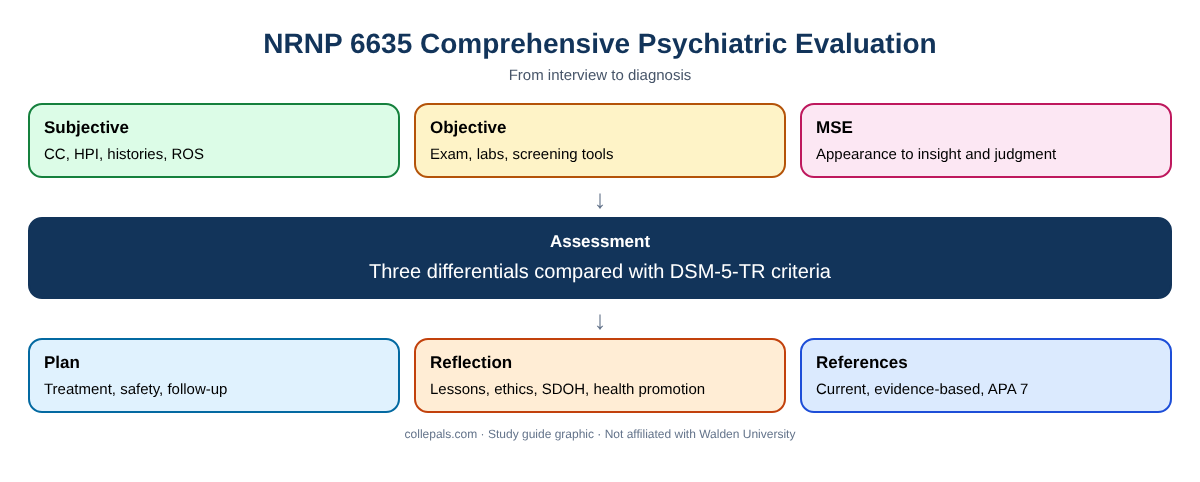
Get it written →The comprehensive psychiatric evaluation is the signature assignment of NRNP 6635, Walden University’s Psychopathology and Diagnostic Reasoning course for psychiatric-mental health nurse practitioner (PMHNP) students. Each evaluation asks you to turn an interview into a structured clinical document: subjective and objective data, a mental status examination, three differential diagnoses compared against DSM-5-TR criteria and a reflection. This complete guide explains what the NRNP 6635 comprehensive psychiatric evaluation involves, how to approach each section and where to find detailed help.
Quick answer
An NRNP 6635 comprehensive psychiatric evaluation typically documents subjective data (chief complaint, history of present illness and past psychiatric, substance use, medical, family and social histories plus review of systems), objective data, a mental status examination, three ranked differential diagnoses supported by DSM-5-TR criteria, a reflection and current evidence-based references. Always follow your course template and rubric.
What Is NRNP 6635?
According to the Walden University catalog, NRNP 6635 Psychopathology and Diagnostic Reasoning is a 3-credit course that prepares PMHNP students to conduct comprehensive and safe psychiatric evaluations, apply psychopathology and diagnostic reasoning to health promotion and psychiatric assessment and develop differential diagnoses for psychiatric and substance use disorders across the lifespan (Walden University, n.d.). The catalog lists NURS 6052, NURS 6501, NURS 6512, NURS 6521 and NURS 6630 as prerequisites.
What a Comprehensive Psychiatric Evaluation Includes
| Section | What it covers | Detailed guide |
|---|---|---|
| Subjective | Chief complaint, history of present illness, histories, review of systems | Subjective and objective assessment |
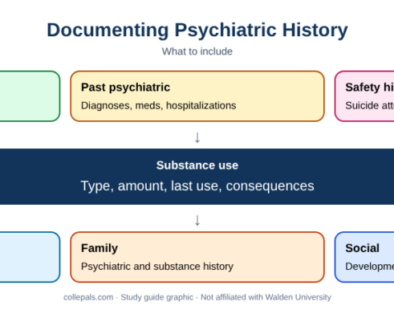
| Psychiatric history | Past diagnoses, treatments, hospitalizations, safety history | Documenting psychiatric history |
| Objective | Vital signs, physical findings, labs, rating scales | Subjective and objective assessment |
| Mental status examination | Appearance through insight and judgment | Writing an MSE |
| Diagnostic impressions | Three differential diagnoses with DSM-5-TR support | Three differentials and comparing DSM-5-TR criteria |
| Plan (if required) | Pharmacologic, psychotherapy, safety, follow-up | Treatment plans |
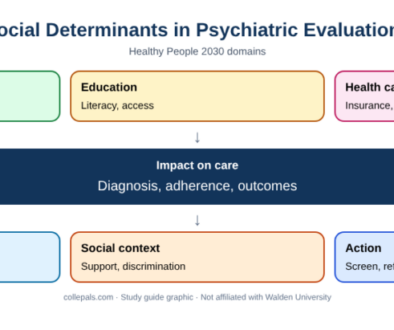
| Reflection | What you would do differently, ethics, SDOH, health promotion | Writing the reflection |
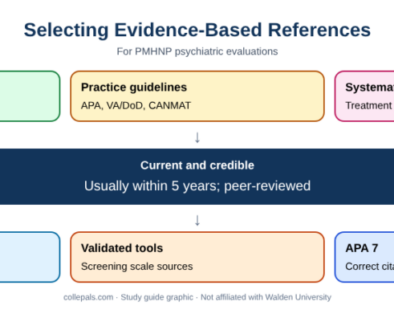
| References | Current, evidence-based sources in APA 7 | Selecting references |
A section-by-section template you can download is available in our NRNP 6635 comprehensive psychiatric evaluation template.
How the Evaluation Mirrors Clinical Practice
The structure follows the American Psychiatric Association’s (2016) practice guidelines for the psychiatric evaluation of adults, which recommend assessing the reason for evaluation, psychiatric and substance use history, medical history, family and social history, mental status, suicide and violence risk and a quantitative measure of symptoms where appropriate. Diagnoses must be grounded in the Diagnostic and Statistical Manual of Mental Disorders, fifth edition, text revision (DSM-5-TR; American Psychiatric Association, 2022).
Common Case Topics
Evaluations often feature video or simulated patients with common psychiatric presentations. Our condition-specific guides walk through each:
- NRNP 6635 Major Depressive Disorder Case Study
- NRNP 6635 Bipolar Disorder Psychiatric Evaluation
- NRNP 6635 Schizophrenia and Psychotic Disorders Case Study
- NRNP 6635 Anxiety Disorders Comprehensive Evaluation
- NRNP 6635 PTSD Psychiatric Evaluation
- NRNP 6635 Neurocognitive Disorders Case Study
Seven Keys to a High-Scoring Evaluation
- Use the template exactly. Keep every heading, even if a section is brief.
- Document only what the case supports. Note when information is not provided instead of inventing it.
- Quote the patient in the chief complaint and key symptoms.
- Write a specific MSE with observed details, not generic phrases.
- Compare criteria explicitly for each differential, including pertinent positives and negatives.
- Address safety: suicide and violence risk, protective factors and plan.
- Support decisions with current evidence and cite in APA 7.
For a step-by-step writing method, see how to write a comprehensive psychiatric evaluation for PMHNP students. If your course includes a recorded presentation, see the NRNP 6635 psychiatric case presentation guide.
Frequently Asked Questions
What course is NRNP 6635?
In Walden University’s catalog, NRNP 6635 is Psychopathology and Diagnostic Reasoning, a 3-credit PMHNP course focused on psychiatric evaluation and differential diagnosis.
How many differential diagnoses are required?
Most NRNP 6635 evaluation templates ask for three differential diagnoses, ranked, with DSM-5-TR criteria explaining why each is supported or ruled out. Check your rubric.
How many references do I need?
Rubrics commonly require at least three current, evidence-based references in addition to the course text. Follow your syllabus.
Can I use the DSM-5 instead of the DSM-5-TR?
Use the DSM-5-TR, the current edition published in 2022, unless your instructor says otherwise.
Get Expert Help With Your NRNP 6635 Evaluations at Collepals
Comprehensive psychiatric evaluations take time, and NRNP 6635 often requires a new one every few weeks. Collepals.com supports PMHNP students with:
- Guidance on organizing your case into the comprehensive psychiatric evaluation template.
- Help comparing DSM-5-TR criteria and building three well-supported differential diagnoses.
- Current, evidence-based references formatted in APA 7.
- Model evaluations, case presentations and reflections you can study, plus editing and proofreading of your drafts.
Browse our free model assignments or learn more about our nursing assignment writing service.
Use Collepals examples as study guides and follow your university’s academic integrity and AI policies when you submit your own work.
More NRNP 6635 study guides
- NRNP 6635 Comprehensive Psychiatric Evaluation Template
- How to Write a Comprehensive Psychiatric Evaluation for PMHNP Students
- How to Write a Mental Status Examination for a Psychiatric Patient
- How to Develop Three Differential Diagnoses in Psychiatric Evaluations
- How to Compare DSM-5-TR Criteria in Psychiatric Case Studies
- How to Write a Psychiatric Evaluation Reflection
Collepals is an independent study resource and is not affiliated with or endorsed by Walden University. Course requirements, templates and rubrics change; always follow your current syllabus and course template. This article is educational and is not clinical advice for any individual patient.
References
American Psychiatric Association. (2016). The American Psychiatric Association practice guidelines for the psychiatric evaluation of adults (3rd ed.). https://doi.org/10.1176/appi.books.9780890426760
American Psychiatric Association. (2022). Diagnostic and statistical manual of mental disorders (5th ed., text rev.). https://doi.org/10.1176/appi.books.9780890425787
Walden University. (n.d.). NRNP 6635 – Psychopathology and diagnostic reasoning. In Walden University catalog. https://academics.waldenu.edu/catalog/courses/nrnp/6635
Get a plagiarism-free answer to this question
Send us your instructions and we’ll match you with the best writer in your subject.
- 100% human-written, zero AI
- Turnitin report included
- Confidential — we never share your data
- Free revisions & refunds