NURS 6501 Disease Process Analysis Assignments
Need help with this assignment?Get an original answer from a qualified tutor — from $10/page.
Get it written →NURS 6501 disease analysis assignments ask you to trace a disorder from its cause to its clinical picture. This guide provides a step-by-step analysis framework, a worked example and a template you can reuse for any disorder.
Quick answer
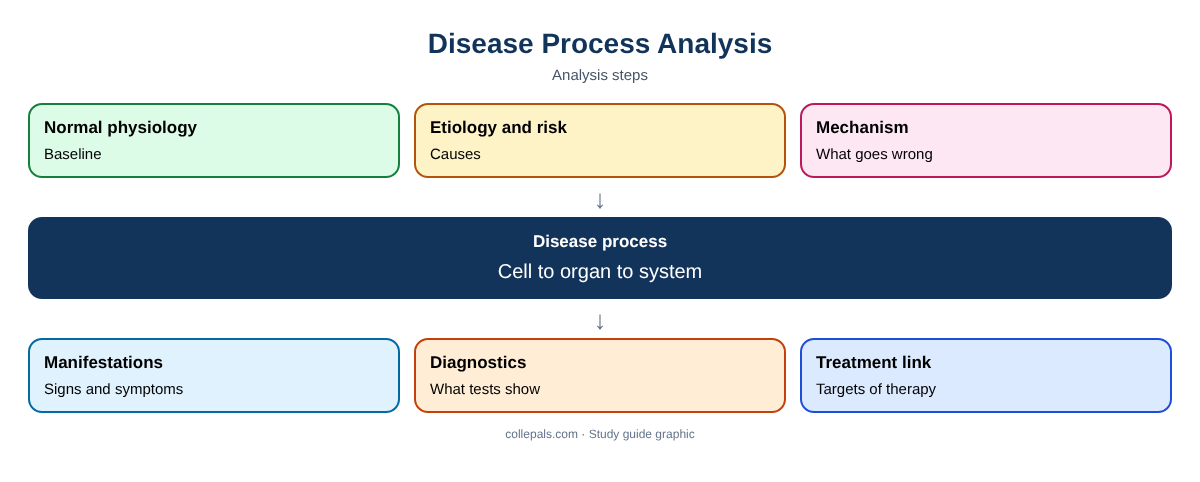
A NURS 6501 disease process analysis explains normal physiology, etiology and risk factors, the sequence of cellular and molecular events (pathogenesis), resulting tissue and organ changes, clinical manifestations and diagnostic findings with their mechanisms, complications and the points in the mechanism that treatments target.
Examples and patient cases on this page are fictional and written by Collepals for study purposes. NURS 6501 is Walden University’s Advanced Pathophysiology course; assignments vary by term, so follow your own syllabus and rubric. This content is educational, not clinical advice. Collepals is not affiliated with Walden University.
Sample document: a disease process analysis template with a worked example (Word).
Disease Process Analysis Framework
| Step | Question to answer |
|---|---|
| Normal physiology | How the system normally works |
| Etiology and risk factors | Causes and predisposing factors |
| Pathogenesis | Sequence of cellular and molecular events |
| Morphologic changes | Tissue and organ changes |
| Clinical manifestations | Signs and symptoms with mechanisms |
| Diagnostics | Lab and imaging findings and why |
| Complications and prognosis | Progression and outcomes |
| Treatment targets | Where therapies act in the mechanism |
Worked Example: Iron Deficiency Anemia (Brief)
- Normal: iron is incorporated into heme for hemoglobin synthesis in erythroblasts.
- Etiology: chronic blood loss (GI, menstrual), poor intake or absorption, increased need (pregnancy).
- Pathogenesis: iron stores (ferritin) deplete first, then transport iron falls and heme synthesis declines.
- Morphology: small (microcytic), pale (hypochromic) red cells.
- Manifestations: fatigue and dyspnea from reduced oxygen-carrying capacity; pallor; glossitis; pica.
- Diagnostics: low ferritin, low MCV, high total iron-binding capacity.
- Treatment targets: replace iron; find and treat the source of loss (Rogers, 2023).
Tips
- Write each step as a cause-and-effect sentence.
- Connect every symptom back to a mechanism.
- Include lifespan differences, such as iron needs in infancy and pregnancy.
Apply the framework to Hypertension: Pathophysiology and Disease Progression, Diabetes Mellitus: Disease Mechanisms and Complications or Chronic Kidney Disease: Pathophysiology and Progression.
Frequently Asked Questions
How is disease analysis different from a case study?
A disease analysis explains a disorder in general; a case study applies mechanisms to a specific patient.
Do I need diagnostics?
Yes. Explain what tests show and why.
Should I include treatment?
Briefly, as targets in the mechanism.
Get Help With NURS 6501 Disease Analysis Assignments
Advanced pathophysiology assignments demand precise mechanisms, current evidence and clear APA writing. Collepals.com helps NURS 6501 and other advanced pathophysiology students:
- Explain disease mechanisms step by step, from cells to symptoms.
- Write case study analyses, discussion posts and peer responses.
- Build concept maps, presentations and research papers.
- Find current evidence, cite in APA 7 and get drafts edited and proofread.
Browse our free model assignments or learn more about our nursing assignment writing service.
Use Collepals examples as study guides and follow your school’s academic integrity and AI policies.
More NURS 6501 and pathophysiology guides
Collepals is an independent study resource. Follow your program’s instructions and rubric and write your own work.
References
Rogers, J. L. (Ed.). (2023). McCance & Huether’s pathophysiology: The biologic basis for disease in adults and children (9th ed.). Elsevier.
Get a plagiarism-free answer to this question
Send us your instructions and we’ll match you with the best writer in your subject.
- 100% human-written, zero AI
- Turnitin report included
- Confidential — we never share your data
- Free revisions & refunds