Fluid and Electrolyte Imbalances: Pathophysiology Guide
Need help with this assignment?Get an original answer from a qualified tutor — from $10/page.
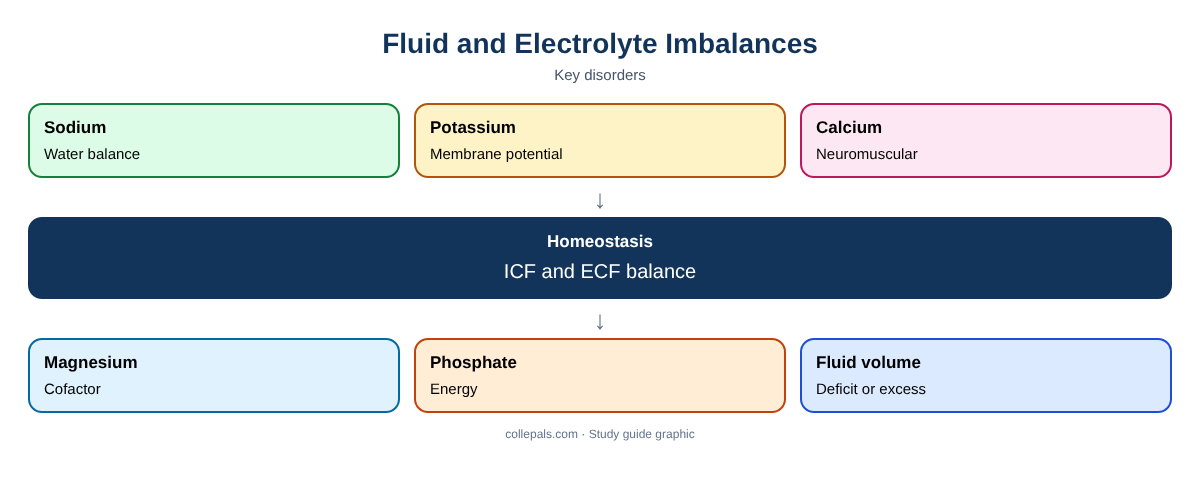
Get it written →Electrolyte imbalance pathophysiology explains how disturbances in sodium, potassium, calcium and magnesium disrupt water balance and the electrical activity of cells. This guide covers each major imbalance with its causes, mechanisms and manifestations.
Quick answer
Sodium disorders mainly reflect water balance and cause neurological symptoms through cell swelling or shrinkage; potassium disorders change resting membrane potential and cause muscle weakness and arrhythmias; calcium disorders alter neuromuscular excitability; and magnesium deficiency causes arrhythmias and makes hypokalemia hard to correct.
Examples and patient cases on this page are fictional and written by Collepals for study purposes. NURS 6501 is Walden University’s Advanced Pathophysiology course; assignments vary by term, so follow your own syllabus and rubric. This content is educational, not clinical advice. Collepals is not affiliated with Walden University.
Sample document: a fluid and electrolyte imbalance quick-reference sheet (Word).
Fluid Balance Basics
Body water is divided between intracellular and extracellular fluid. Sodium is the main extracellular cation and determines extracellular osmolality; potassium is the main intracellular cation. Antidiuretic hormone, aldosterone and natriuretic peptides regulate water and sodium (Rogers, 2023).
Major Electrolyte Imbalances
| Imbalance | Common causes | Mechanism and manifestations |
|---|---|---|
| Hyponatremia (Na <135) | Water excess relative to sodium (SIADH, heart failure, diuretics) | Cerebral edema: headache, confusion, seizures |
| Hypernatremia (Na >145) | Water loss or inadequate intake | Cell shrinkage: thirst, confusion, seizures |
| Hypokalemia (K <3.5) | GI or renal losses, diuretics, insulin | Hyperpolarization: weakness, cramps, arrhythmias, U waves |
| Hyperkalemia (K >5.0) | Kidney failure, ACEi/ARBs, acidosis, cell lysis | Depolarization: peaked T waves, arrhythmias, weakness |
| Hypocalcemia | Hypoparathyroidism, vitamin D deficiency, CKD | Neuromuscular excitability: tetany, Chvostek and Trousseau signs |
| Hypercalcemia | Hyperparathyroidism, malignancy | Lethargy, constipation, kidney stones, short QT |
| Hypomagnesemia | GI loss, alcohol use, diuretics | Tremor, arrhythmias, refractory hypokalemia |
Key Mechanisms to Explain
- Sodium and the brain: rapid falls in sodium draw water into brain cells; overly rapid correction of chronic hyponatremia can cause osmotic demyelination.
- Potassium and the heart: potassium sets the resting membrane potential, so both high and low levels cause dangerous arrhythmias.
- Calcium and nerves: low extracellular calcium lowers the threshold for nerve firing, causing tetany.
Fluid Volume Imbalances
Fluid volume deficit (dehydration, hemorrhage) causes tachycardia, hypotension and low urine output; fluid volume excess (heart failure, CKD) causes edema, hypertension and crackles (see Heart Failure: Pathophysiology and Clinical Manifestations and Chronic Kidney Disease: Pathophysiology and Progression).
Frequently Asked Questions
Why is hyperkalemia dangerous?
It depolarizes cardiac cells, causing peaked T waves and potentially fatal arrhythmias.
Why correct chronic hyponatremia slowly?
Rapid correction can cause osmotic demyelination syndrome.
How does magnesium affect potassium?
Low magnesium increases renal potassium loss, making hypokalemia refractory.
Get Help With Electrolyte Pathophysiology
Advanced pathophysiology assignments demand precise mechanisms, current evidence and clear APA writing. Collepals.com helps NURS 6501 and other advanced pathophysiology students:
- Explain disease mechanisms step by step, from cells to symptoms.
- Write case study analyses, discussion posts and peer responses.
- Build concept maps, presentations and research papers.
- Find current evidence, cite in APA 7 and get drafts edited and proofread.
Browse our free model assignments or learn more about our nursing assignment writing service.
Use Collepals examples as study guides and follow your school’s academic integrity and AI policies.
More NURS 6501 and pathophysiology guides
Collepals is an independent study resource. Follow your program’s instructions and rubric and write your own work.
References
Rogers, J. L. (Ed.). (2023). McCance & Huether’s pathophysiology: The biologic basis for disease in adults and children (9th ed.). Elsevier.
Get a plagiarism-free answer to this question
Send us your instructions and we’ll match you with the best writer in your subject.
- 100% human-written, zero AI
- Turnitin report included
- Confidential — we never share your data
- Free revisions & refunds