Genetics and Molecular Pathophysiology in Disease
Need help with this assignment?Get an original answer from a qualified tutor — from $10/page.
Get it written →Genetics pathophysiology explains how changes in DNA, chromosomes and gene expression lead to disease. NURS 6501 case studies often ask which genes are involved in a presentation. This guide covers inheritance patterns, molecular mechanisms, epigenetics and pharmacogenomics.
Quick answer
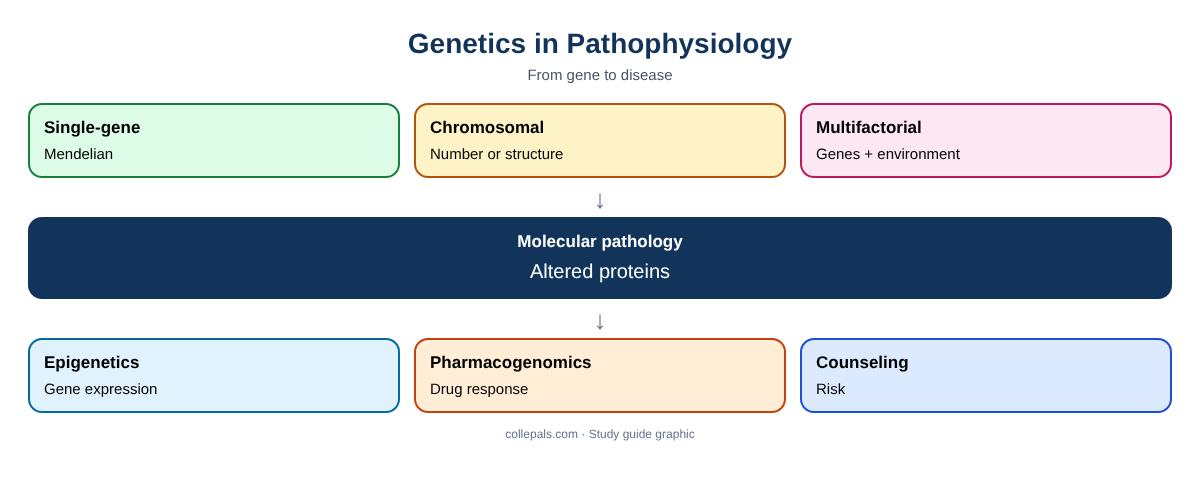
Genetic disease arises from single-gene mutations (dominant, recessive or X-linked), chromosomal abnormalities, multifactorial gene–environment interactions and mitochondrial inheritance. Mutations alter protein structure or amount, disrupting function; epigenetic changes alter gene expression without changing DNA sequence; and pharmacogenomic variants influence drug response.
Examples and patient cases on this page are fictional and written by Collepals for study purposes. NURS 6501 is Walden University’s Advanced Pathophysiology course; assignments vary by term, so follow your own syllabus and rubric. This content is educational, not clinical advice. Collepals is not affiliated with Walden University.
Sample document: a genetics and molecular pathophysiology study sheet (Word).
Patterns of Genetic Disease
| Pattern | Mechanism | Examples |
|---|---|---|
| Autosomal dominant | One altered allele causes disease | Huntington disease, familial hypercholesterolemia |
| Autosomal recessive | Two altered alleles needed | Cystic fibrosis, sickle cell disease |
| X-linked recessive | Mostly affects males | Hemophilia A, Duchenne muscular dystrophy |
| Chromosomal | Abnormal number or structure | Down syndrome (trisomy 21), Turner syndrome |
| Multifactorial | Many genes plus environment | Hypertension, type 2 diabetes, many cancers |
| Mitochondrial | Maternal inheritance | Some myopathies |
Molecular Mechanisms
- Loss of function: a mutation reduces protein activity, as with CFTR in cystic fibrosis.
- Gain of function: a protein becomes overactive, as with some oncogenes.
- Dominant negative: an abnormal protein interferes with the normal one.
- Point mutation: a single base change, such as the glutamate-to-valine substitution in sickle hemoglobin (Rogers, 2023).
Epigenetics
DNA methylation and histone modification change gene expression without altering sequence. Environmental exposures such as smoking, diet and stress can shift these marks and influence disease risk across generations.
Pharmacogenomics
Variants in drug-metabolizing enzymes affect response. For example, CYP2C19 poor metabolizers activate clopidogrel less effectively, and HLA-B*57:01 testing before abacavir prevents hypersensitivity.
Answering “Which Genes Are Involved?”
- Name specific genes when known (for example, BRCA1/2, HLA-DRB1, APOE).
- Explain how the variant changes risk or mechanism.
- For multifactorial disorders, describe polygenic risk plus environment.
Related: NURS 6501 Pathophysiology Case Studies: Writing Guide and Cancer: Cellular Mechanisms, Tumor Growth and Metastasis.
Frequently Asked Questions
What is the difference between genotype and phenotype?
Genotype is the genetic makeup; phenotype is the observable trait or disease.
What is penetrance?
The proportion of people with a genotype who show the phenotype.
Why do multifactorial diseases cluster in families?
Shared genes and shared environments.
Get Help With Genetics in Pathophysiology
Advanced pathophysiology assignments demand precise mechanisms, current evidence and clear APA writing. Collepals.com helps NURS 6501 and other advanced pathophysiology students:
- Explain disease mechanisms step by step, from cells to symptoms.
- Write case study analyses, discussion posts and peer responses.
- Build concept maps, presentations and research papers.
- Find current evidence, cite in APA 7 and get drafts edited and proofread.
Browse our free model assignments or learn more about our nursing assignment writing service.
Use Collepals examples as study guides and follow your school’s academic integrity and AI policies.
More NURS 6501 and pathophysiology guides
Collepals is an independent study resource. Follow your program’s instructions and rubric and write your own work.
References
Rogers, J. L. (Ed.). (2023). McCance & Huether’s pathophysiology: The biologic basis for disease in adults and children (9th ed.). Elsevier.
Get a plagiarism-free answer to this question
Send us your instructions and we’ll match you with the best writer in your subject.
- 100% human-written, zero AI
- Turnitin report included
- Confidential — we never share your data
- Free revisions & refunds