Inflammation and Immune Response: Pathophysiology Assignment Guide
Need help with this assignment?Get an original answer from a qualified tutor — from $10/page.
Get it written →Inflammation pathophysiology explains how the body responds to injury and infection, and how that same response can cause disease when it is excessive or persistent. This assignment guide covers acute and chronic inflammation, innate and adaptive immunity and how to apply these concepts.
Quick answer
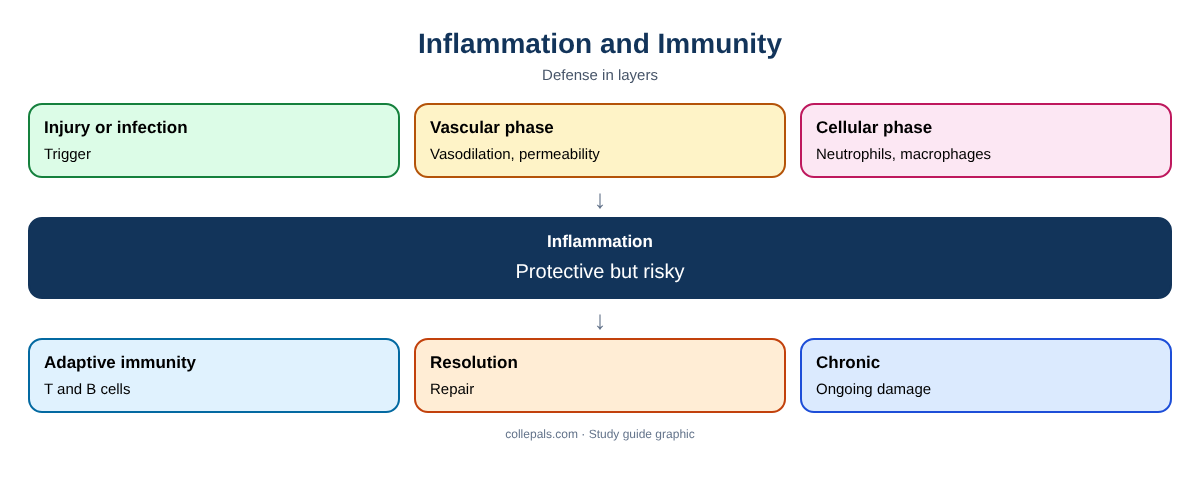
Inflammation is the innate immune response to injury or infection: vascular changes (vasodilation and increased permeability) and cellular recruitment (neutrophils, then macrophages) remove the cause and start repair, while cytokines such as IL-1, IL-6 and TNF produce systemic effects like fever. Adaptive immunity adds specific T- and B-cell responses. Chronic or dysregulated inflammation drives tissue damage in many diseases.
Examples and patient cases on this page are fictional and written by Collepals for study purposes. NURS 6501 is Walden University’s Advanced Pathophysiology course; assignments vary by term, so follow your own syllabus and rubric. This content is educational, not clinical advice. Collepals is not affiliated with Walden University.
Sample document: an inflammation and immunity study sheet (Word).
Phases of Acute Inflammation
| Phase | Mechanism | Clinical sign |
|---|---|---|
| Vascular | Vasodilation (histamine, prostaglandins) and increased permeability | Redness, heat, swelling |
| Cellular | Neutrophil margination, rolling, adhesion, diapedesis and phagocytosis | Pus; pain from mediators (bradykinin, prostaglandins) |
| Systemic | IL-1, IL-6, TNF act on hypothalamus and liver | Fever, leukocytosis, acute-phase proteins (CRP) |
| Resolution or chronic | Macrophages clear debris; repair by regeneration or fibrosis | Healing or ongoing damage |
Innate vs. Adaptive Immunity
| Innate | Adaptive |
|---|---|
| Immediate, nonspecific | Delayed (days), specific |
| Barriers, neutrophils, macrophages, NK cells, complement | T cells (helper, cytotoxic) and B cells (antibodies) |
| No memory | Memory enables faster secondary response |
Chronic Inflammation in Disease
Persistent inflammation dominated by macrophages and lymphocytes causes tissue destruction and fibrosis. It contributes to atherosclerosis, rheumatoid arthritis, type 2 diabetes, COPD and cancer (Rogers, 2023). Dysregulated systemic inflammation is central to sepsis (see Sepsis: Pathophysiology and Multiorgan Dysfunction).
Applying It in Assignments
- Name the mediators and the cells involved.
- Connect each sign to its mechanism (for example, swelling to permeability).
- Explain why anti-inflammatory therapies work, such as NSAIDs blocking prostaglandin synthesis.
Related: Autoimmune Disease: Pathophysiology and Disease Progression and Rheumatoid Arthritis: Disease Mechanisms and Inflammation.
Frequently Asked Questions
What are the cardinal signs of inflammation?
Redness, heat, swelling, pain and loss of function.
What causes fever?
Cytokines such as IL-1, IL-6 and TNF raise the hypothalamic set point via prostaglandin E2.
Is inflammation always harmful?
No. Acute inflammation protects; harm comes from excessive or chronic responses.
Get Help With Inflammation Pathophysiology Assignments
Advanced pathophysiology assignments demand precise mechanisms, current evidence and clear APA writing. Collepals.com helps NURS 6501 and other advanced pathophysiology students:
- Explain disease mechanisms step by step, from cells to symptoms.
- Write case study analyses, discussion posts and peer responses.
- Build concept maps, presentations and research papers.
- Find current evidence, cite in APA 7 and get drafts edited and proofread.
Browse our free model assignments or learn more about our nursing assignment writing service.
Use Collepals examples as study guides and follow your school’s academic integrity and AI policies.
More NURS 6501 and pathophysiology guides
Collepals is an independent study resource. Follow your program’s instructions and rubric and write your own work.
References
Rogers, J. L. (Ed.). (2023). McCance & Huether’s pathophysiology: The biologic basis for disease in adults and children (9th ed.). Elsevier.
Get a plagiarism-free answer to this question
Send us your instructions and we’ll match you with the best writer in your subject.
- 100% human-written, zero AI
- Turnitin report included
- Confidential — we never share your data
- Free revisions & refunds