Cellular Injury and Adaptation: Advanced Pathophysiology Guide
Need help with this assignment?Get an original answer from a qualified tutor — from $10/page.
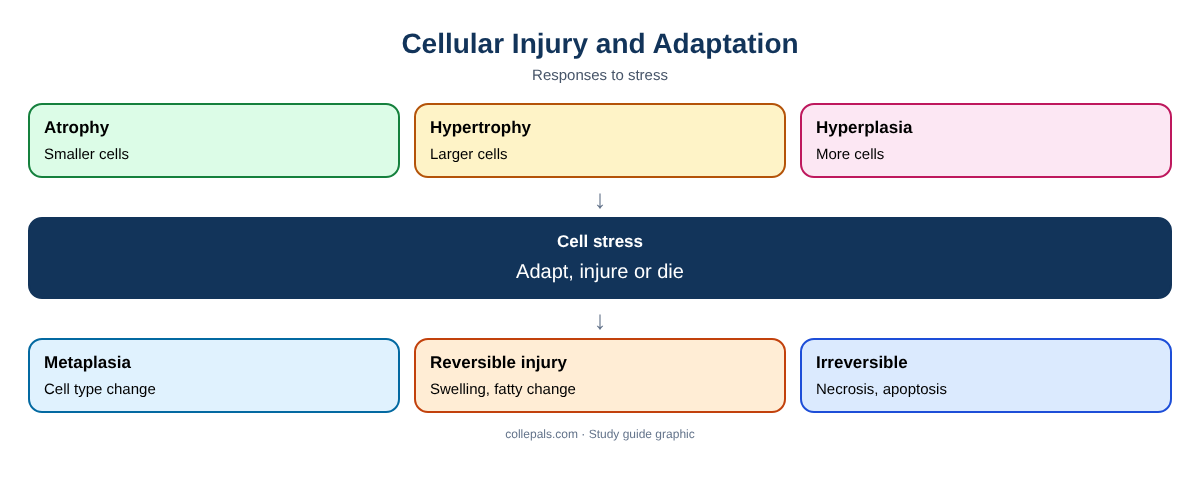
Get it written →Cellular injury pathophysiology explains how cells respond when stress exceeds their ability to cope. Cells first adapt; if stress continues, they become injured, and severe or prolonged injury leads to cell death. This guide covers cellular adaptations, mechanisms of injury and how to apply them in advanced pathophysiology assignments.
Quick answer
Cells respond to stress by adapting through atrophy, hypertrophy, hyperplasia or metaplasia. When stress exceeds adaptation, injury occurs through ATP depletion, membrane damage, calcium influx, free radicals and DNA damage. Reversible injury causes swelling and fatty change; irreversible injury ends in necrosis or apoptosis.
Examples and patient cases on this page are fictional and written by Collepals for study purposes. NURS 6501 is Walden University’s Advanced Pathophysiology course; assignments vary by term, so follow your own syllabus and rubric. This content is educational, not clinical advice. Collepals is not affiliated with Walden University.
Sample document: a cellular adaptation and injury study sheet (Word).
Cellular Adaptations
| Adaptation | Definition | Common causes | Example |
|---|---|---|---|
| Atrophy | Decrease in cell size | Disuse, denervation, reduced blood supply, aging | Muscle atrophy after immobilization |
| Hypertrophy | Increase in cell size | Increased workload or hormonal stimulation | Left ventricular hypertrophy in hypertension |
| Hyperplasia | Increase in cell number | Hormonal or compensatory stimulation | Endometrial hyperplasia; liver regeneration |
| Metaplasia | Replacement of one mature cell type by another | Chronic irritation | Squamous metaplasia in smokers’ bronchi; Barrett esophagus |
| Dysplasia | Disordered growth (atypical hyperplasia) | Persistent injury; precancerous | Cervical dysplasia |
Dysplasia is not a true adaptation but an atypical change that can progress to cancer (Rogers, 2023).
Mechanisms of Cellular Injury
- Hypoxia and ATP depletion: the most common cause of injury. Loss of ATP stops the sodium-potassium pump, so sodium and water enter the cell, causing swelling; anaerobic metabolism produces lactic acid.
- Free radicals (reactive oxygen species): damage lipids, proteins and DNA; reperfusion after ischemia can add oxidative injury.
- Calcium influx: activates enzymes that damage membranes, proteins and DNA.
- Membrane damage: loss of selective permeability.
- Chemical, infectious, physical and immunologic injury: toxins, microbes, trauma and immune attack.
Reversible vs. Irreversible Injury
| Reversible | Irreversible |
|---|---|
| Cellular swelling (hydropic change) | Severe mitochondrial damage |
| Fatty change | Membrane rupture |
| Blebbing, loss of microvilli | Nuclear changes: pyknosis, karyorrhexis, karyolysis |
| Function recovers when stress removed | Cell death: necrosis or apoptosis |
Applying It in Assignments
Link adaptations to clinical findings. For example, explain left ventricular hypertrophy in hypertension as an adaptation to increased afterload that eventually becomes maladaptive (see Hypertension: Pathophysiology and Disease Progression). For cell death, see Apoptosis vs. Necrosis: Disease Mechanisms Explained.
Frequently Asked Questions
What is the most common cause of cell injury?
Hypoxia, which depletes ATP.
Is metaplasia reversible?
Often yes, if the stimulus is removed, but persistent metaplasia can progress to dysplasia.
What marks irreversible injury?
Severe mitochondrial dysfunction and membrane rupture.
Get Help With Cellular Injury Pathophysiology
Advanced pathophysiology assignments demand precise mechanisms, current evidence and clear APA writing. Collepals.com helps NURS 6501 and other advanced pathophysiology students:
- Explain disease mechanisms step by step, from cells to symptoms.
- Write case study analyses, discussion posts and peer responses.
- Build concept maps, presentations and research papers.
- Find current evidence, cite in APA 7 and get drafts edited and proofread.
Browse our free model assignments or learn more about our nursing assignment writing service.
Use Collepals examples as study guides and follow your school’s academic integrity and AI policies.
More NURS 6501 and pathophysiology guides
Collepals is an independent study resource. Follow your program’s instructions and rubric and write your own work.
References
Rogers, J. L. (Ed.). (2023). McCance & Huether’s pathophysiology: The biologic basis for disease in adults and children (9th ed.). Elsevier.
Get a plagiarism-free answer to this question
Send us your instructions and we’ll match you with the best writer in your subject.
- 100% human-written, zero AI
- Turnitin report included
- Confidential — we never share your data
- Free revisions & refunds