Metabolic Disorders: Disease Mechanisms and Clinical Manifestations
Need help with this assignment?Get an original answer from a qualified tutor — from $10/page.
Get it written →Metabolic pathophysiology explains how disturbances in the handling of glucose, lipids, hormones and metabolites produce disease. This guide covers insulin resistance, metabolic syndrome, thyroid disorders and other metabolic conditions, with their clinical manifestations.
Quick answer
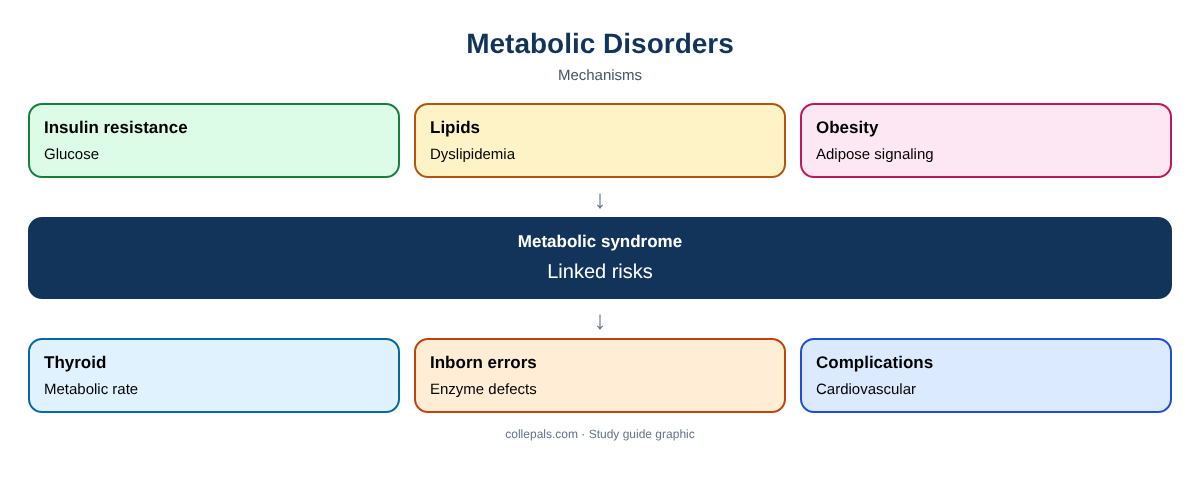
Metabolic disorders arise when the body cannot properly produce, use or regulate energy substrates and hormones. Insulin resistance, dyslipidemia and visceral obesity cluster as metabolic syndrome and raise cardiovascular and diabetes risk; thyroid disorders change metabolic rate; and enzyme defects or urate imbalances cause toxic accumulation of metabolites.
Examples and patient cases on this page are fictional and written by Collepals for study purposes. NURS 6501 is Walden University’s Advanced Pathophysiology course; assignments vary by term, so follow your own syllabus and rubric. This content is educational, not clinical advice. Collepals is not affiliated with Walden University.
Sample document: a metabolic disorders mechanism sheet (Word).
Key Metabolic Disorders
| Disorder | Mechanism | Manifestations |
|---|---|---|
| Insulin resistance | Reduced cellular response to insulin in muscle, liver and fat | Hyperglycemia, compensatory hyperinsulinemia |
| Dyslipidemia | Increased hepatic VLDL, low HDL, small dense LDL | Atherosclerosis |
| Obesity | Adipose tissue releases free fatty acids, cytokines and altered adipokines | Inflammation, insulin resistance |
| Hypothyroidism | Low thyroid hormone slows metabolism | Fatigue, weight gain, cold intolerance, bradycardia |
| Hyperthyroidism | Excess thyroid hormone (Graves disease) | Weight loss, heat intolerance, tachycardia, tremor |
| Gout | Urate overproduction or underexcretion | Crystal arthritis |
| Inborn errors | Enzyme defects (for example, phenylketonuria) | Accumulation of toxic metabolites |
Metabolic Syndrome
Metabolic syndrome is a cluster of central obesity, elevated triglycerides, low HDL, elevated blood pressure and elevated fasting glucose. The unifying mechanism is insulin resistance linked to visceral adipose tissue, which releases free fatty acids and inflammatory cytokines that impair insulin signaling, while altered adipokines such as low adiponectin worsen it (Rogers, 2023). The syndrome increases risk for type 2 diabetes and cardiovascular disease.
Thyroid Regulation
The hypothalamus releases TRH, the pituitary releases TSH and the thyroid releases T4 and T3, which set basal metabolic rate. Negative feedback means primary hypothyroidism shows high TSH and low free T4, while Graves disease shows low TSH and high free T4 because stimulating antibodies activate the TSH receptor.
Clinical Manifestations to Explain
- Acanthosis nigricans reflects hyperinsulinemia stimulating skin growth factor receptors.
- Fatty liver reflects increased fatty acid delivery and hepatic lipogenesis.
- Weight gain in hypothyroidism reflects reduced metabolic rate and fluid retention.
Details: Diabetes Mellitus: Disease Mechanisms and Complications and gout in NURS 6501 Pathophysiology Case Studies: Writing Guide.
Frequently Asked Questions
What links obesity to insulin resistance?
Free fatty acids, inflammatory cytokines and altered adipokines from visceral fat impair insulin signaling.
Why is TSH high in primary hypothyroidism?
Low thyroid hormone removes negative feedback on the pituitary.
Is metabolic syndrome a disease?
It is a risk cluster that predicts diabetes and cardiovascular disease.
Get Help With Metabolic Pathophysiology
Advanced pathophysiology assignments demand precise mechanisms, current evidence and clear APA writing. Collepals.com helps NURS 6501 and other advanced pathophysiology students:
- Explain disease mechanisms step by step, from cells to symptoms.
- Write case study analyses, discussion posts and peer responses.
- Build concept maps, presentations and research papers.
- Find current evidence, cite in APA 7 and get drafts edited and proofread.
Browse our free model assignments or learn more about our nursing assignment writing service.
Use Collepals examples as study guides and follow your school’s academic integrity and AI policies.
More NURS 6501 and pathophysiology guides
Collepals is an independent study resource. Follow your program’s instructions and rubric and write your own work.
References
American Diabetes Association Professional Practice Committee for Diabetes. (2025). Standards of care in diabetes—2026. Diabetes Care, 49(Suppl. 1).
Rogers, J. L. (Ed.). (2023). McCance & Huether’s pathophysiology: The biologic basis for disease in adults and children (9th ed.). Elsevier.
Get a plagiarism-free answer to this question
Send us your instructions and we’ll match you with the best writer in your subject.
- 100% human-written, zero AI
- Turnitin report included
- Confidential — we never share your data
- Free revisions & refunds