Aging and Pathophysiological Changes in the Human Body
Need help with this assignment?Get an original answer from a qualified tutor — from $10/page.
Get it written →Aging pathophysiology examines how normal aging changes cells and organ systems, reduces physiological reserve and alters how disease presents in older adults. This guide covers the hallmarks of aging and system-by-system changes relevant to advanced practice.
Quick answer
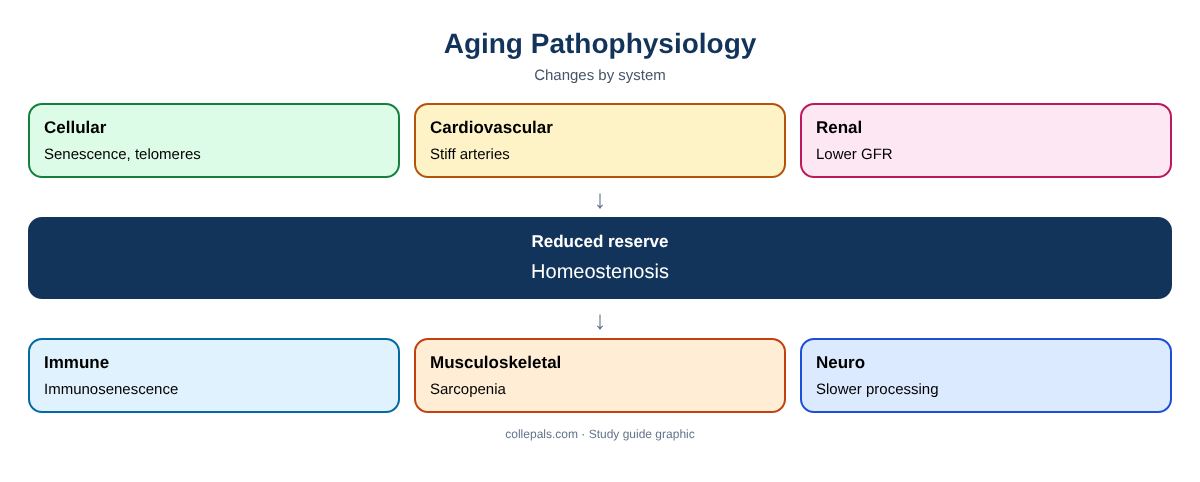
Aging reduces physiological reserve through cellular processes such as genomic instability, telomere attrition, cellular senescence, mitochondrial dysfunction and chronic inflammation. System changes include arterial stiffening, lower GFR, immunosenescence, sarcopenia and slower neural processing, so older adults are more vulnerable to stressors and often present atypically.
Examples and patient cases on this page are fictional and written by Collepals for study purposes. NURS 6501 is Walden University’s Advanced Pathophysiology course; assignments vary by term, so follow your own syllabus and rubric. This content is educational, not clinical advice. Collepals is not affiliated with Walden University.
Sample document: an aging pathophysiology changes-by-system sheet (Word).
Hallmarks of Aging
López-Otín et al. (2023) described twelve hallmarks of aging, including genomic instability, telomere attrition, epigenetic alterations, loss of proteostasis, mitochondrial dysfunction, cellular senescence, stem cell exhaustion, altered intercellular communication and chronic inflammation. These interacting processes reduce the body’s capacity to maintain homeostasis.
Changes by System
| System | Change | Consequence |
|---|---|---|
| Cellular | Telomere shortening, genomic instability, cellular senescence, mitochondrial dysfunction | Reduced repair and regeneration |
| Cardiovascular | Arterial stiffening, increased afterload, LV wall thickening | Isolated systolic hypertension, HFpEF risk |
| Respiratory | Reduced elastic recoil and chest wall compliance | Lower reserve, aspiration risk |
| Renal | Fewer functioning nephrons, lower GFR | Drug accumulation, fluid and electrolyte vulnerability |
| Immune | Immunosenescence and chronic low-grade inflammation (“inflammaging”) | Infections, weaker vaccine responses |
| Musculoskeletal | Sarcopenia, bone loss | Falls, fractures |
| Neurological | Neuronal loss, slower conduction | Slower reaction time; delirium risk |
Homeostenosis and Atypical Presentation
As reserve narrows, smaller stressors push older adults into dysfunction. Infections may present as confusion or falls rather than fever, and myocardial infarction may present with dyspnea rather than chest pain (Rogers, 2023).
Implications for APRNs
- Adjust drug doses for reduced renal function.
- Look for atypical presentations of acute illness.
- Distinguish normal aging from disease, such as normal cognitive slowing versus dementia.
- Promote exercise and nutrition to counter sarcopenia.
Related: Hypertension: Pathophysiology and Disease Progression and Chronic Kidney Disease: Pathophysiology and Progression.
Frequently Asked Questions
Is high blood pressure a normal part of aging?
Arterial stiffening raises systolic pressure with age, but hypertension is still a treatable disease.
What is homeostenosis?
The age-related narrowing of physiological reserve.
Why do older adults get delirium?
Reduced brain reserve makes them vulnerable to infection, drugs and dehydration.
Get Help With Aging Pathophysiology
Advanced pathophysiology assignments demand precise mechanisms, current evidence and clear APA writing. Collepals.com helps NURS 6501 and other advanced pathophysiology students:
- Explain disease mechanisms step by step, from cells to symptoms.
- Write case study analyses, discussion posts and peer responses.
- Build concept maps, presentations and research papers.
- Find current evidence, cite in APA 7 and get drafts edited and proofread.
Browse our free model assignments or learn more about our nursing assignment writing service.
Use Collepals examples as study guides and follow your school’s academic integrity and AI policies.
More NURS 6501 and pathophysiology guides
Collepals is an independent study resource. Follow your program’s instructions and rubric and write your own work.
References
López-Otín, C., Blasco, M. A., Partridge, L., Serrano, M., & Kroemer, G. (2023). Hallmarks of aging: An expanding universe. Cell, 186(2), 243–278. https://doi.org/10.1016/j.cell.2022.11.001
Rogers, J. L. (Ed.). (2023). McCance & Huether’s pathophysiology: The biologic basis for disease in adults and children (9th ed.). Elsevier.
Get a plagiarism-free answer to this question
Send us your instructions and we’ll match you with the best writer in your subject.
- 100% human-written, zero AI
- Turnitin report included
- Confidential — we never share your data
- Free revisions & refunds