How to Document Psychiatric History and Presenting Symptoms
Need help with this assignment?Get an original answer from a qualified tutor — from $10/page.
Get it written →A psychiatric evaluation is only as good as the history it rests on. In NRNP 6635, the chief complaint, history of present illness and past histories provide the evidence you will use to support your differential diagnoses. This guide explains how to document psychiatric history and presenting symptoms completely and concisely.
Quick answer
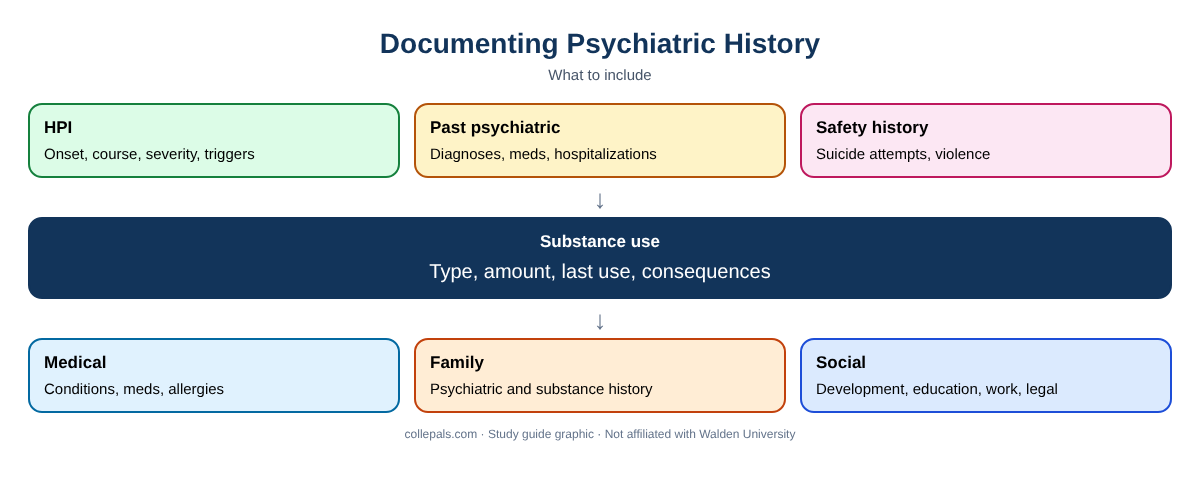
Document the chief complaint in the patient’s words, then a chronological history of present illness (onset, duration, course, severity, triggers, associated symptoms, functional impact and prior treatment), followed by past psychiatric history including safety history, substance use, medical history and medications, family psychiatric and substance use history and psychosocial history.
Chief Complaint
Quote the patient: “I haven’t slept in a week and I can’t stop worrying.” If someone else initiated the visit, note who and why.
History of Present Illness
Use a structured approach, adapting the familiar OLDCARTS mnemonic (onset, location, duration, character, aggravating and alleviating factors, radiation, timing, severity) to psychiatric symptoms: onset and precipitants, duration and course, symptom details, severity, what helps or worsens symptoms, impact on work, relationships and self-care and treatments tried.
Sample HPI (fictional)
T.W. is a 45-year-old man presenting with two months of worsening insomnia, irritability and low mood following his divorce. He reports sleeping 4 hours a night, losing interest in fishing and feeling “useless.” Symptoms are worse in the evenings. He has missed six workdays in the past month. He denies prior manic episodes. He started drinking 5–6 beers nightly over the past month to help him sleep. He has not received treatment for this episode. PHQ-9: 17. AUDIT-C: 8.
Past Psychiatric History
- Previous diagnoses and who made them.
- Medications tried, doses, duration, response and side effects.
- Psychotherapy and other treatments.
- Psychiatric hospitalizations and emergency visits.
- Safety history: suicide attempts (method, lethality, circumstances), self-harm, violence and access to firearms.
Substance Use History
Ask about alcohol, tobacco and nicotine, cannabis, opioids, stimulants, sedatives and other substances: age of first use, pattern, amount, last use, withdrawal history, consequences and treatment. Tools such as the AUDIT-C support alcohol screening.
Medical History
Include chronic conditions, neurological history, head injuries, seizures, endocrine disorders, current medications (including over-the-counter and supplements), allergies and, when relevant, pregnancy status. Many medical conditions and medications cause psychiatric symptoms.
Family History
Document psychiatric illness, suicide and substance use among first- and second-degree relatives. A family history of bipolar disorder, for example, raises concern about bipolarity in a patient presenting with depression.
Psychosocial History
Cover developmental history, education, employment, relationships, children, living situation, finances, legal history, military service, trauma and abuse history, cultural and spiritual background and support systems. These details reveal stressors, strengths and social determinants; see social determinants of health in psychiatric evaluations.
Documentation Tips
- Write chronologically and concisely.
- Include pertinent negatives that help rule out differentials.
- Note the source and reliability of information.
- Use nonjudgmental language.
- Follow the APA (2016) practice guideline elements for a complete psychiatric evaluation.
Frequently Asked Questions
What is the difference between the CC and the HPI?
The chief complaint is the patient’s brief reason for the visit in their own words; the HPI is your detailed narrative of the current problem.
Where does suicide history go?
In the past psychiatric history (safety history), with current suicidal ideation documented in the MSE and risk assessment.
How much social history is needed?
Enough to understand stressors, supports, function and social determinants that affect diagnosis and treatment.
Get Help Documenting Psychiatric History at Collepals
Comprehensive psychiatric evaluations take time, and NRNP 6635 often requires a new one every few weeks. Collepals.com supports PMHNP students with:
- Guidance on organizing your case into the comprehensive psychiatric evaluation template.
- Help comparing DSM-5-TR criteria and building three well-supported differential diagnoses.
- Current, evidence-based references formatted in APA 7.
- Model evaluations, case presentations and reflections you can study, plus editing and proofreading of your drafts.
Browse our free model assignments or learn more about our nursing assignment writing service.
Use Collepals examples as study guides and follow your university’s academic integrity and AI policies when you submit your own work.
More NRNP 6635 study guides
- NRNP 6635 Comprehensive Psychiatric Evaluation: Complete Guide
- NRNP 6635 Comprehensive Psychiatric Evaluation Template
- NRNP 6635 Psychiatric Evaluation: Subjective and Objective Assessment
- How to Write a Mental Status Examination for a Psychiatric Patient
- Social Determinants of Health in Psychiatric Patient Evaluations
Collepals is an independent study resource and is not affiliated with or endorsed by Walden University. Course requirements, templates and rubrics change; always follow your current syllabus and course template. This article is educational and is not clinical advice for any individual patient.
References
American Psychiatric Association. (2016). The American Psychiatric Association practice guidelines for the psychiatric evaluation of adults (3rd ed.). https://doi.org/10.1176/appi.books.9780890426760
Get a plagiarism-free answer to this question
Send us your instructions and we’ll match you with the best writer in your subject.
- 100% human-written, zero AI
- Turnitin report included
- Confidential — we never share your data
- Free revisions & refunds