How to Write Weekly Capstone Practicum Reflections
Need help with this assignment?Get an original answer from a qualified tutor — from $10/page.
Get it written →Weekly practicum reflections keep a record of your learning and show faculty how you are meeting course competencies. Writing them well takes less time when you follow a consistent structure. This guide explains how to write weekly capstone practicum reflections, with three sample weekly entries you can download.
Quick answer
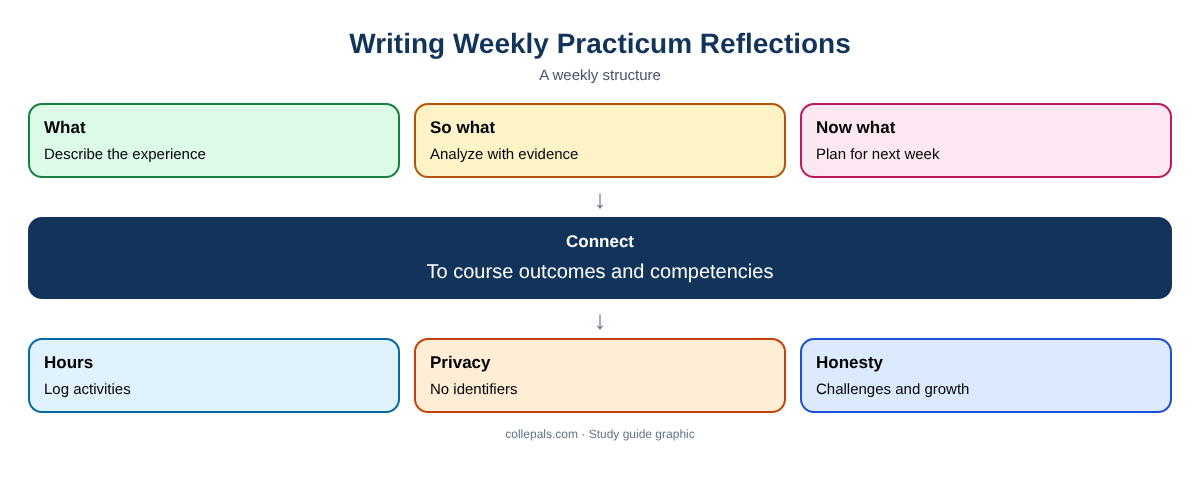
Use a three-part structure each week: What happened (a specific experience), So what (why it matters, analyzed with evidence and course concepts) and Now what (what you will do next). Connect each entry to a course outcome or competency, log your hours, protect privacy and be honest about challenges as well as successes.
Sample document: three sample weekly reflection entries using What? So what? Now what? (Word).
The What? So What? Now What? Structure
| Part | Purpose | Prompt |
|---|---|---|
| What? | Describe | What happened this week? What did you do? |
| So what? | Analyze | Why does it matter? What does evidence or theory say? |
| Now what? | Plan | What will you do differently or next? |
Sample Entry
Week 4 (fictional)
What: I led two 20-minute huddles on the new fall plan; several nurses worried it would add work. So what: Workload concerns are a common barrier to practice change, and adoption depends on how simple and compatible an innovation seems (Rogers, 2003). Now what: I shortened the template to five items and recruited two champions to model it.
Tips
- Focus on one meaningful experience per entry.
- Use evidence or course concepts in the analysis.
- Link to your capstone progress and barriers.
- Record hours and activities if required.
- Avoid identifiers.
Gibbs’ (1988) reflective cycle is an alternative structure if your program prefers it.
Frequently Asked Questions
How do I find something to reflect on?
Choose a moment that surprised, challenged or taught you something.
Can reflections be informal?
They are personal but should still be professional and well written.
What if nothing significant happened?
Reflect on routine work: what you noticed, how it connects to your project and what you learned.
Get Help With Weekly Reflections at Collepals
Capstone and practicum courses combine clinical hours, project milestones and weekly writing. Collepals.com supports BSN, MSN and DNP students through every stage:
- Choosing a feasible topic and writing a clear problem statement and PICOT question.
- Finding and synthesizing current evidence for your literature review and EBP proposal.
- Building implementation and evaluation plans, reflective journals and final presentations.
- Model documents you can study, plus editing and APA 7 formatting for your drafts.
Browse our free model assignments or learn more about our nursing assignment writing service.
Use Collepals samples as study guides and follow your school’s academic integrity and AI policies.
More capstone and practicum guides
Collepals is an independent study resource. Sample documents use a fictional falls-prevention project and illustrative data; follow your program’s templates, rubrics and approval processes, and write your own work.
References
Gibbs, G. (1988). Learning by doing: A guide to teaching and learning methods. Further Education Unit, Oxford Polytechnic.
Rogers, E. M. (2003). Diffusion of innovations (5th ed.). Free Press.
Get a plagiarism-free answer to this question
Send us your instructions and we’ll match you with the best writer in your subject.
- 100% human-written, zero AI
- Turnitin report included
- Confidential — we never share your data
- Free revisions & refunds